

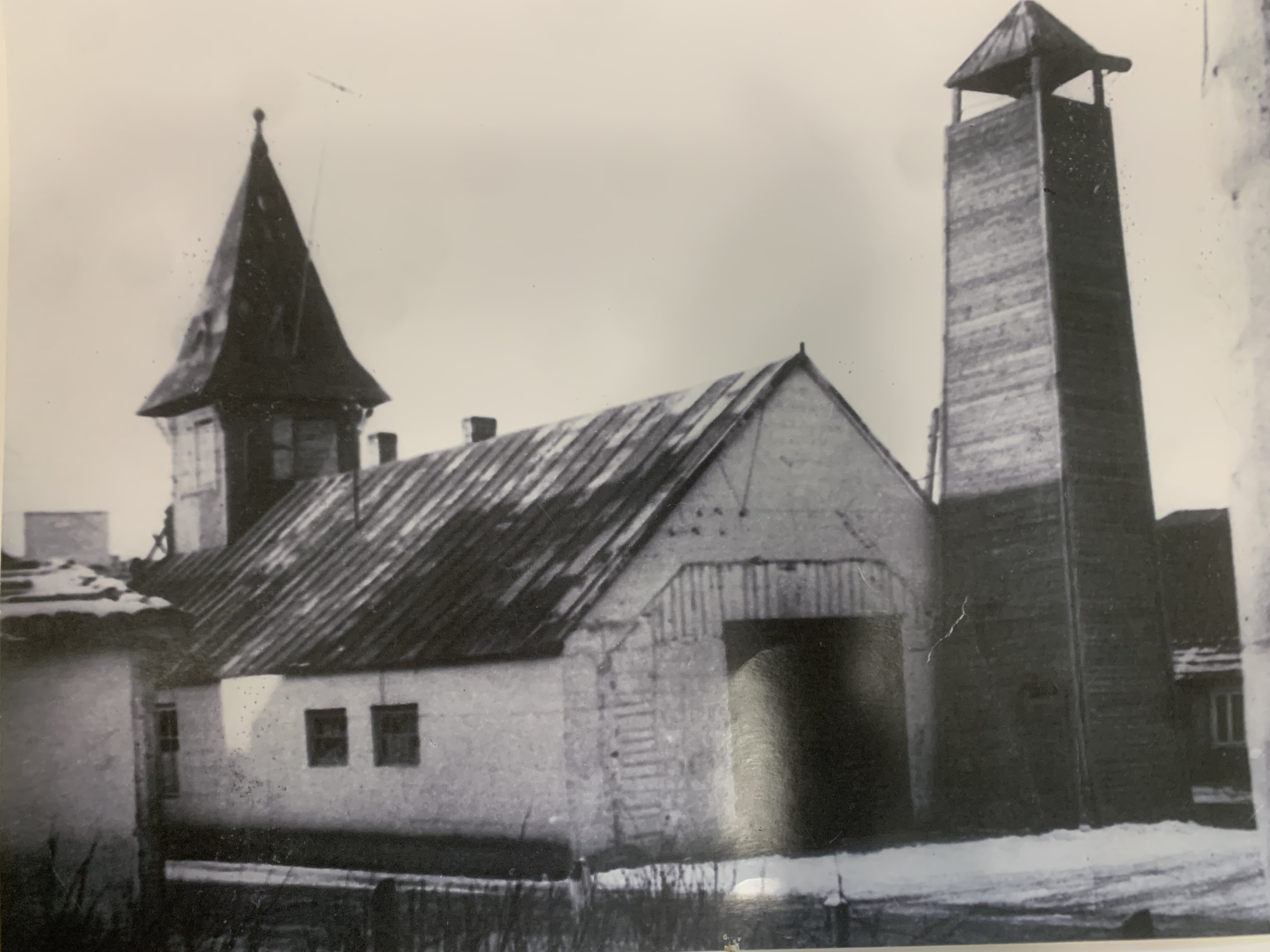
A place to store firemen's personal goods and on-duty watchmen was also required when the firemen's associations were first formed. This applied particularly to smaller towns. As a result, towers were set up close by so that firefighters' equipment could be stored there, and they could notice a fire in town from there. Fire hoses were dried in the towers. A fire could be reported in a few different ways. Street boxes were put up in major cities that had access to electricity. Behind the glass was an electric bell that, when pressed, sent a signal to the firemen's sheds, allowing them to determine which area of the city the fire had originated in. Typically, fires in smaller towns were reported with a general alarm. To alert the public and other firefighters to a fire in the town, fire stations typically had bells or sirens in their towers. The protocol for reporting a fire was crucial because the fate of the burning house, the village, and occasionally even the city, was frequently decided by the firefighters' arrival time. The majority of residential structures were constructed from wood and were closely spaced. As a result, when one house caught fire, it often rapidly spread to adjacent homes.
In Pakruojis, a fireman's shed also emerged circa 1928. But the fire department had been meeting here before. The Pakurai fire brigade guards used a special brass trumpet to alert the public to the fire, and shortly after, a hand-cranked siren was installed inside the tower. The fact that sheds were used for purposes other than fighting fires is also intriguing. They had civic halls that served as venues for a variety of cultural and other events. For instance, there were films, dances, and performances.